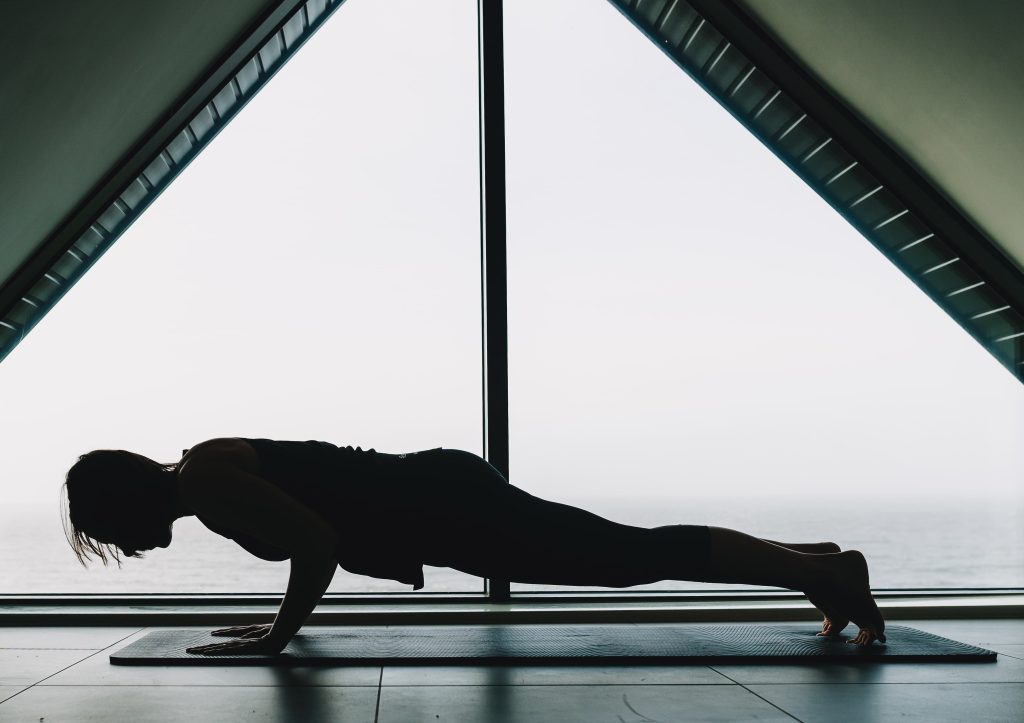
Our September focus in our Core Strength and Movement classes has been bone density (members choice) and this month, strong bones is what we’ve been practising for in class.
You don’t need a diagnosis of osteopenia or osteoporosis for this to matter to you. If you’re over 40, this is genuinely worth twenty minutes of your time – because the decline in bone density that leads to those diagnoses starts long before anyone gets a scan, and it’s one of the few things about ageing we actually have real influence over.
What actually happens to our bones
Two terms come up a lot around this: osteopenia and osteoporosis.
- Osteopenia means your bone density is lower than normal, but not low enough to be classed as osteoporosis. Think of it as an early warning sign.
- Osteoporosis means bones have lost enough density and structure that they become fragile and much more likely to fracture, even from a minor fall or bump.
Neither is something you did wrong. They’re a normal (if frustrating) part of how our bodies change.
Why this starts to matter after 40
Bone density naturally begins to decline from around 40 onwards – by some estimates, roughly 1% a year, in both men and women. For women, menopause accelerates this considerably. Oestrogen plays a huge role in maintaining bone density – it helps regulate the constant process of old bone being broken down and new bone being built. When oestrogen drops sharply during perimenopause and menopause, that balance tips, and bone breakdown can outpace bone building quite quickly in the years around menopause.
This is exactly why bone health isn’t something to think about “later” – the changes start well before most of us are paying attention, and long before any diagnosis would show up on a scan.
What weakened bones actually mean for daily life
This is the part that doesn’t get talked about enough. It’s not just an abstract number on a scan. Weaker bones mean:
- A much higher risk of fracture from everyday knocks – a trip on the pavement, a fall from standing height
- Fractures that take longer to heal and can seriously affect independence, especially hip and spine fractures
- Changes to posture – repeated small compression fractures in the spine can lead to a forward-curving upper back (sometimes called a dowager’s hump), loss of height, and that stooped posture we sometimes assume is just “getting older”
That change in posture isn’t inevitable. It’s often a visible sign of what’s happening to the bone underneath.
The good news: this is genuinely trainable
Here’s what I want you to take from this – bone responds to load. That’s not just physio theory, it’s what the research consistently shows. Clinical studies looking at postmenopausal women doing structured resistance and impact training have found meaningful improvements in bone density at the spine and hip – safely, with no adverse effects. Other research has looked at how this kind of training can be built safely into ongoing programmes for people with osteoporosis, and further studies on impact-based training have added support for the idea that even small doses of impact loading help drive bone density improvements.
This isn’t only relevant once bone density has already dropped. Research on healthy adults over 40 with completely normal bone mass shows the same combination – progressive resistance plus impact – helps maintain density and slow that natural age-related decline, rather than just treating a problem once it’s there. Roughly 2-3 hours a week of structured, bone-loading activity appears to be enough to make a meaningful difference.
The word doing the heavy lifting there is progressive. Nobody needs to be jumping off boxes in week one. It starts small – and that’s exactly what we’ve been doing in class.
What we’ve been doing in class
Over the last two weeks, we’ve built resistance work using just bodyweight and resistance bands – no fixed anchor points needed, we’ve even used the band underfoot for standing rows. Alongside that, we’ve introduced simple impact exercises, starting with something as accessible as a heel drop.
Here’s a clip from class so you can see exactly what that looks like:
Watch the heel drop clip on Instagram: https://www.instagram.com/reel/Dc1haXFuWec/
This can genuinely be done by everybody, whatever your current fitness level. That’s the whole point – we build from wherever you’re starting.
Want to build this into your own routine?
You don’t need to already have a diagnosis for this to be worth doing properly. Whether you want a personalised plan to protect your bones as you age, or you do have concerns about osteopenia or osteoporosis and want to work through them, I’d love to help you one to one.
Not local to South Wales? No problem at all – I offer online consultations too.
Whatever stage you’re at, I hope this has given you something useful to take away. Looking after your bones now really is a gift to your future self, and I’m always here if you want to talk it through.
Love, Rhi x